
Facilities
Uppuveli and Nilaveli Beach
Considered to be one of the more pristine beaches in the entire island, the beaches of Uppuveli and Nilaveli in Trincomalee pose the idyllic setting for that perfect beach vacation.
Uppuveli Beach
The Uppuveli Beach, on the other hand, is relatively smaller but still thrives in many water sports activities. One such unique activity you could engage in, is deep sea diving, as the far outreaches of the beach is known to have many shipwrecks that date even before European colonisation. Lined with many great eateries, both these beaches are perfect to escape the everyday mundane and just take in the exquisite sun, sand, and sea for once.

Nilaveli Beach
Strolling along the Nilaveli Beach’s stretch of golden sand and azure waters that goes for more than a kilometre allows you to reflect on the exotic beauty of the country, while also partaking in some exhilarating water sports. The beach is known for being a hub for scuba diving, snorkelling, fishing, and, of course, swimming. In addition to the many water sports activities, you could also partake in an excursion to the Pigeon Island National Park that is a short boat ride away. You could easily immerse yourself in the rare and endemic marine life around the island.

Koneswaram Temple
Believed to date back to 400BC, the Koneswaram Temple in Trincomalee is a significant Hindu Temple that has gone through many prosperous years, as well as many turbulent ones during European colonisation. Located inside the historic Fort Frederick, the temple gives that perfect balance of the island’s unique culture in an otherwise European setting.
The Koneswaram Temple is considered to be one of the Pancha Ishwaram (one of the five abodes of Lord Shiva), thus making it one of the most important Hindu temples in the whole country. The temple flourished since its inception, as the many kingdoms that came, such as the Anuradhapura Kingdom, Chola Empire, Pandyan Kingdom, and the Jaffna Kingdom made sure to protect the place of worship. Come the 17th century, and the ‘Temple of a Thousand Pillars’ was pillaged and destroyed by the Portuguese colonists, which resulted in the loss of many priceless artefacts. Regardless, the subsequent colonisers, namely the Dutch, and the British allowed the rebuilding of this sacred temple. Moreover, during this time, many lost artefacts were recovered from many excavations conducted by archaeologists.

Pigeon Island National Park
The Pigeon Island National Park, located in Trincomalee, is one of the newer parks in the island, and has quickly become one of the more popular parks in the country. Declared a national park in 2003, the nature reserve consists of two islands that are connected by corals, and is home to a myriad of marine species, as the 100 or so coral species surrounding the island proves to be a perfect habitat for several marine species. Although sprawling with rare and endemic marine life, the islands were once used as a shooting range during the Second World War.
While the islands are home to marine life, it is also known for the birds that take refuge in the area. The rocky outcrop of the island is home to a number of endangered Rock Pigeons. According to the Wildlife Department, the islands are home to about 300 species of reef fish that dwell in the coral reefs. Engaging in some exciting scuba diving during the season that typically lasts from May to September allows you to see just a glimpse of Sri Lanka’s unique marine ecosystem that surrounds its lands. If you are lucky, you might be able to spot adult and juvenile Blacktip Reef Sharks, along with the rare Hawksbill and Olive Ridley turtles.


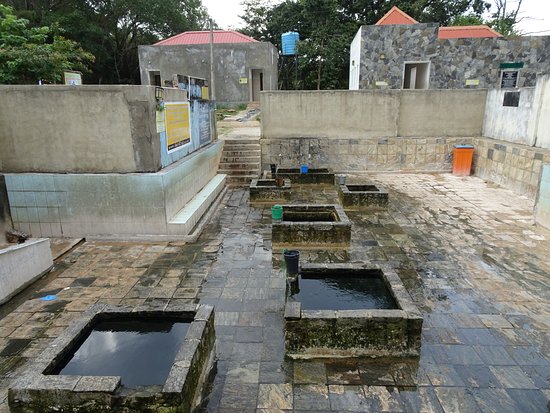
Kanniya Hot Water Spring Trincomalee Sri Lanka
Kanniya Hot Springs is a site with hot water wells located in Eastern Province, Trincomalee District of Sri Lanka. Average temperature of these wells is 42 Celsius and the temperature is slightly different to one another. Kanniya Hot spring is popular tourist destination in Trincomalee district and both local & foreign travelers. Currently this is managed by Pradeshiya Sabha (Local Council) of Trincomalee. People in this area believe that this hot water is good for some skin deceases and it has healing power for Arthritis and Rheumatic.
Further study reveals that due to increases of atmospheric precipitation decreases the thermal temperature decreases and a corresponding decrease atmospheric precipitation which defines increases the thermal water. Therefore, there is an existing intimate relation between atmospheric precipitation and thermal groundwater. The chemical analysis results revealed that Kinniya spring water contains more HCO3 and Madunagala spring water contained more Cl ions.
Whale Watching in Trincomalee
From dolphins to tropical fish, and various sharks, the Indian Ocean has been quite generous with its marine biodiversity. But if you’re looking to have a whale of a time, Sri Lanka has just what you need! With many hot whale-watching spots and even the world’s largest resident blue whale community, Sri Lanka’s waters are teeming with these gentle giants!
Trincomalee, even though it’s best known for its amazing surf, is also one of the best places to catch a glimpse of these whales! Located about 2 hours away from Pasikudah, Trincomalee boasts a bunch of whale watching spots, but the most popular ones are the Nilaveli and Uppuveli beaches. Here, you can even see groups of bottlenose dolphins, being their usual mischievous selves in the water. The occasional orca, too, may show up (though this is rare)!
Another friendly behemoth that frequents the waters of Trinco is the sperm whale, which deep-dives down the very bottom to feed and then pops up the rare now and then to say hello and take a breath.
July is the best time to spot blue whales here, whereas whale watching, in general, is in season on the East Coast from May to October every year. If you’re experienced and are able to get a guide for your underwater expedition, you could even swim along with the whales!

